The Bishop's Curse and the Border Reivers.
A land apart: the Anglo-Scottish border where family, feud, and fury defined a way of life.
Introduction
In the spring of 1525, in the market places of the Scottish Borders, a voice rose above the wind and the doubtless moo-ing of coos. Gavin Dunbar, Archbishop of Glasgow, read from a parchment that would become one of the most extraordinary documents in British history: the Monition of Cursing better known as the Bishop's Curse.
The words were relentless, exhaustive, almost theatrical in their fury. They condemned not just the men who rode by night, but every part of their existence:
“I curse their head and all the hairs of their head; I curse their face, their eyes, their mouth, their nose, their tongue, their teeth, their shoulders, their breast, their heart, their stomach, their back, their womb, their arms, their legs, their hands, their feet… I curse them going and I curse them riding; I curse them standing and I curse them sitting; I curse them eating and I curse them drinking; I curse their corn, their cattle, their wool, their sheep, their horses, their swine, their geese, their hens…”
The curse went on for more than a thousand words, damning the reivers, their families, livestock, crops, their homes, even the very ground they trod, until every conceivable aspect of their lives was placed under divine malediction. Up to and including the hair on their heads. It was no ordinary excommunication. It was an attempt to do what kings, wardens, and armies had failed to achieve; break the power of the Border Reivers.
For nearly three centuries, from the late 1200s until the early 1600s, the Anglo-Scottish frontier had been a 'place apart'. Here, in the valleys of Liddesdale, Teviotdale, Redesdale, and Annandale, ordinary farmers and lairds had turned raiding into a way of life. They stole cattle, burned steadings, took captives for ransom, and feuded across generations, often with little regard for whether their victims were English or Scottish. Kinship and surname loyalty mattered far more than crowns or borders.
The Bishop’s Curse was the Church’s last, desperate weapon when secular justice had collapsed. Yet even this thunderbolt from the pulpit did not end the reiving. The riders continued to cross the hills under moonlight, and the ballads would remember them not as damned criminals, but as bold, often tragic figures of a wild frontier.
This is the story of the Border Reivers: who they were, why they flourished, how they lived, and why eventually their world came to an end.
Read the full Bishop's Curse (Monition of Cursing, 1525)
I curse, damn, and anathemize all and sundry the aforesaid oft-named persons…
I curse their head and all the hairs of their head; I curse their face, their eyes, their mouth, their nose, their tongue, their teeth, their forehead, their shoulders, their breast, their heart, their stomach, their back, their womb, their arms, their legs, their hands, their feet, and every part of their body, from the top of their head to the soles of their feet, before and behind, within and without.
I curse them going, and I curse them riding; I curse them standing, and I curse them sitting; I curse them eating, and I curse them drinking; I curse them rising, and I curse them lying; I curse them at home, I curse them away from home; I curse them within the house, I curse them without the house; I curse their wives, their children, and their servants who participate in their deeds.
I curse their horses, their carts, their oxen, their sheep, their swine, their geese, their hens, and all their livestock. I curse their halls, their chambers, their kitchens, their stables, their barns, their byres, their barnyards, their vegetable patches, their ploughs, their harrows, and the goods and houses necessary for their sustenance and welfare.
… [continues with biblical invocations, curses on their goods, denial of sacraments, and eternal damnation]
… And finally, I curse them with the curse wherewith God cursed Cain, and the curse wherewith the serpent was cursed, and the curse wherewith the earth was cursed when it received the blood of Abel…
(Modernized and condensed for readability; original in Middle Scots. Full historical text available in sources such as the Bannatyne Miscellany or online transcriptions.)
Who Were the Border Reivers?
The Border Reivers were not a professional army, nor a distinct ethnic group, but ordinary men and women of the Anglo-Scottish frontier who turned raiding into a way of life. They were farmers, shepherds, tenants, small lairds, and even minor gentry living in the valleys and hills of what are now Northumberland, Cumbria, Durham, and the Scottish Borders, and Dumfries & Galloway. Most were born into families that had endured centuries of cross-border warfare, from Edward I’s invasions in the 1290s through the repeated flare-ups of the 15th and 16th centuries. When armies marched through, burning crops and driving off livestock, settled agriculture became precarious. Raiding, stealing cattle, sheep, horses, goods, or even people for ransom became an economic necessity and, over time, a seasonal occupation.
What bound them together was not nationality but kinship and surname. Loyalty ran first to the extended family or “surname” (a Scots term for clan-like groups), not to the English or Scottish crown. Major reiving surnames included, on the Scottish side, Armstrong, Elliot, Scott, Kerr, Johnstone, Maxwell, and Turnbull; on the English side, Charlton, Robson, Graham, Forster, Fenwick, and Heron. Many families straddled the border; Armstrongs, Grahams, Bells, and Nixons had branches in both kingdoms, so a man might raid Scots one week and English the next, or ally with kin across the line against rivals on his own side. National identity was fluid: as one contemporary observer put it, they were “Scottish when they will, and English at their pleasure.”
Reiving reached its height in the 16th century, especially during the reigns of Elizabeth I in England and Mary Queen of Scots / James VI in Scotland. It was rarely a full-time profession. Most reivers were part-time raiders; they farmed or herded by day and rode out by moonlight when the need (or opportunity) arose. Raids were seasonal, often in late summer or autumn when cattle were fattest and nights still long enough for hard riding. Groups varied from a handful of close kin to several hundred men drawn from allied surnames. Women played vital roles too: managing tower houses during absences, defending them when attacked, and sometimes joining in the raids themselves. In this world, the surname was both shield and sword. An insult to one member dishonoured the whole family; a theft demanded collective vengeance. The reivers were, above all, products of their environment: tough, resourceful, fiercely loyal to kin, and unbound by the laws of distant courts.
Why Reiving Emerged and Endured
The Border Reivers did not invent raiding; they adapted to a frontier that had been systematically devastated for centuries. The root cause stretches back to the late 13th century, when Edward I of England invaded Scotland in 1296, sparking the Wars of Scottish Independence. For the next three hundred years, the borderlands became a repeated theatre of invasion, counter-invasion, and scorched-earth warfare. English and Scottish armies burned crops, slaughtered livestock, razed villages, and carried off what remained. The Treaty of York (1237) had fixed the borderline along the Solway Firth and River Tweed, but peace was fleeting. Each new conflict left the region poorer, the fields trampled, and the people more desperate and hardened.
Geography made recovery almost impossible. The border hills; the Cheviots, Lammermuirs, and northern Pennines were rugged, windswept, and ill-suited to large-scale arable farming. Thin soils, heavy rainfall, and short growing seasons favoured pastoralism as sheep and cattle that could graze rough pasture. But herds were mobile, valuable, and easy to steal. In a landscape of narrow valleys, peat bogs, and hidden cleughs (ravines), ambush and escape were straightforward; pursuit was slow and dangerous. The same terrain that defeated armies also protected raiders.
Central authority was weak and distant. London and Edinburgh were days or weeks away; local justice depended on wardens of the Marches, often Border lords themselves who had their own surnames to protect and feuds to settle. Wardens were frequently complicit, turning a blind eye to their kin’s raids or using their position to settle personal scores. The Days of Truce, meant to resolve cross-border grievances, often dissolved into violence or farce. Royal proclamations and military expeditions came and went, but the border remained a place where the king’s writ ran thin.
Raiding thus became an economic adaptation. In autumn, when cattle were fattest, reivers struck to replenish herds depleted by war or weather. “Blackmail” (protection money, from the Gaelic màl for rent) bought safety from powerful surnames. Ransoms from captured travellers or farmers provided cash or goods. These were not acts of pure greed but survival in a war-scarred land where honest labour could be wiped out in a single night. The reivers filled the void left by failed governance, turning necessity into a grim, enduring way of life.
Life on the Frontier
Daily existence for the Border Reivers blended the rhythms of rural life with the constant threat, and practice of violence. Most reivers were not full-time outlaws; they were farmers, shepherds, and small tenants who worked the land by day. They tended sheep and cattle on the rough upland pastures, grew oats and barley where the soil allowed, repaired stone dykes, and mended tools. But martial skills were as essential as ploughing: boys learned to ride hardy Galloway ponies from childhood, to handle lance, bow, sword, and later the short dog "dag" pistol, and to read the landscape for ambush or escape. Women managed the household, spun wool, preserved food, and often took up arms when towers came under attack. Life was hard, seasonal, and precarious, crops could fail, winters gnaw, and a raid could wipe out a year's labour overnight.
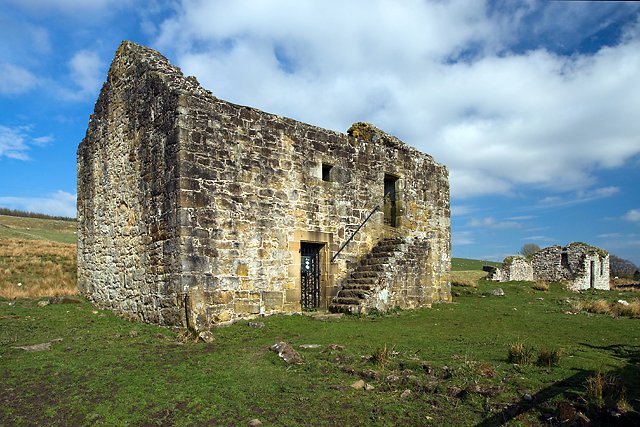
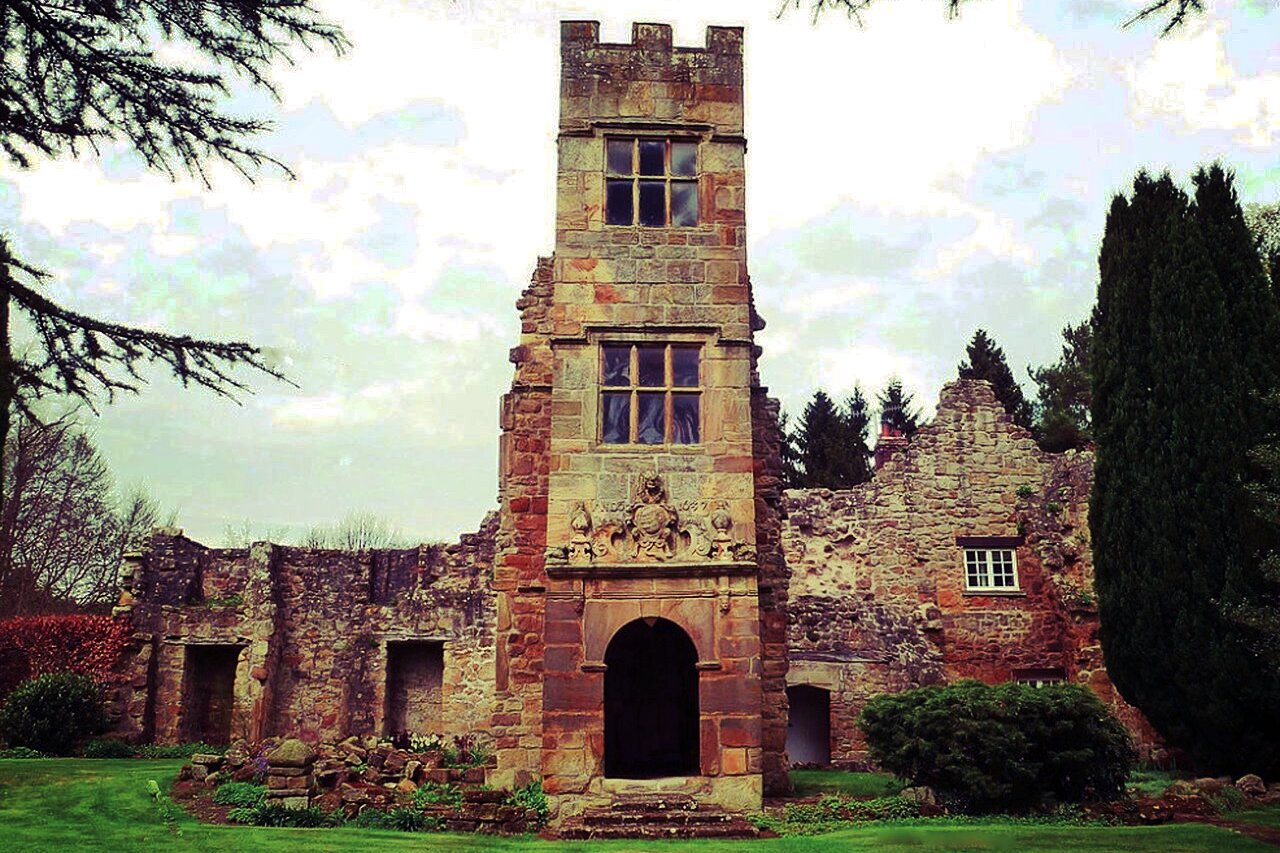
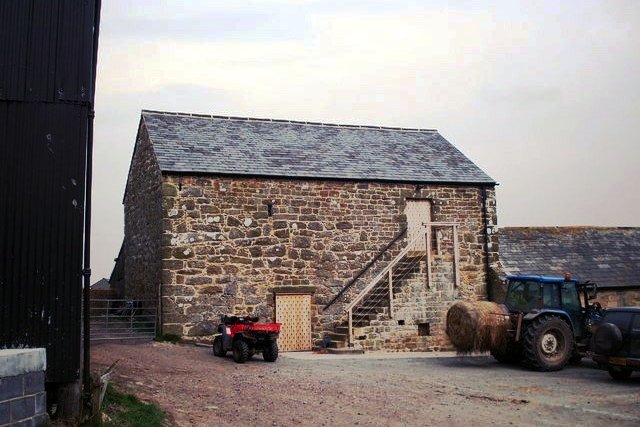
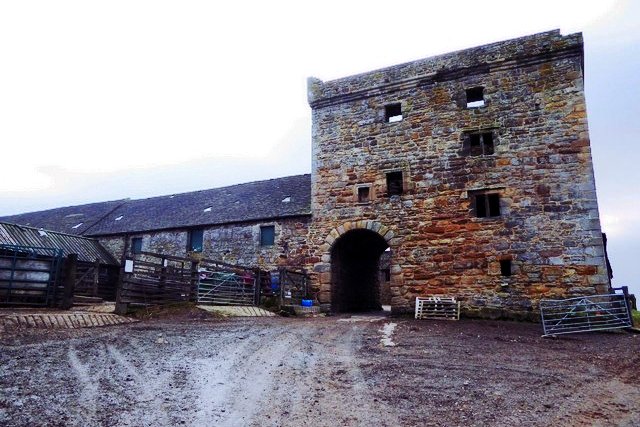
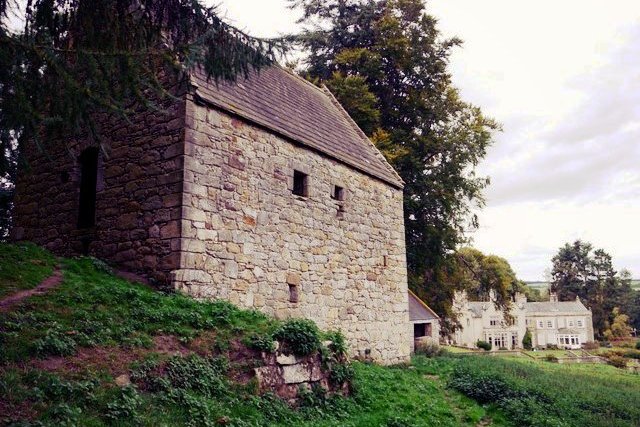
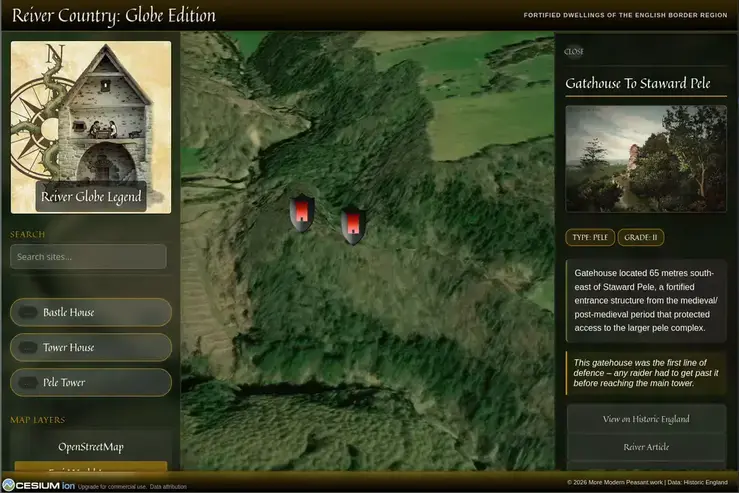
To survive these threats, families built fortified homes. The most iconic were the pele towers and bastles that still dot the upland north-east landscape. A pele tower was a tall, narrow stone keep (often three or four storeys) with thick walls, a vaulted basement for livestock, narrow slit windows for defence, and a parapet for lookout. Bastles were simpler: two-storey farmhouses with the ground floor vaulted for animals and goods, the family living above, and a heavy door or ladder access to thwart intruders. Larger strongholds like Hermitage Castle or Ferniehirst belonged to powerful lairds. These buildings were not castles in the grand sense but practical refuges, places to retreat when the beacon fires flared on the hills.




Life on the Frontier Continued
Raiding itself was highly seasonal and tactical. Most strikes came in late summer or autumn, when nights were long, cattle fat, and fields harvested. Reivers rode at night in small parties (5–50 men, sometimes hundreds for big raids), using moonlight and knowledge of hidden paths. They struck fast: drive off herds, burn thatch, seize goods or captives, then vanish before dawn. The hot trod gave victims the legal right to pursue thieves immediately across the border with “hound and horn,” but success was rare. Disputes were meant to be settled at the Days of Truce, formal meetings where English and Scottish wardens heard grievances but these often turned into brawls or ambushes.
One of the most daring exploits was the rescue of Kinmont Willie Armstrong in 1596. Willie, a notorious Liddesdale reiver, was captured during a truce day and imprisoned in Carlisle Castle, an illegal breach of Reiver safe conduct rules. On a stormy April night, Walter Scott of Buccleuch led about 200 Scots across the border, scaled the castle walls, broke open the dungeon, and carried Willie back to Scotland in triumph. The raid humiliated the English warden, Lord Scrope, and became legend-proof that reivers could strike deep into enemy territory and escape with their prize.
Yet the ballads that immortalised these feats painted a romantic picture. Songs like “Kinmont Willie” celebrated cunning and courage, turning grim necessity into heroic adventure. In reality, reiving brought fear, poverty, and sudden death. A single night could leave families homeless, children orphaned, or feuds burning for generations. The frontier was a place of beauty and brutality, where survival demanded both the plough and the sword.
The Border Marches and Cross-Border Dynamics
To manage the chronic lawlessness of the frontier, both England and Scotland divided the border into three Marches, East, Middle, and West, on each side, a system formalised in the 13th century and refined through treaties and custom. The English Marches roughly covered Northumberland and parts of Cumbria; the Scottish Marches encompassed Roxburghshire, Berwickshire, Dumfriesshire, and the Borders. Each March had its own warden: a powerful local lord appointed by the crown to enforce justice, collect taxes, and maintain order. Wardens were meant to be impartial, but many were themselves from reiving families or had ties to the surnames they policed. This built-in conflict of interest often made enforcement patchy or selective.
The Marches were linked by the Days of Truce, formal meetings held several times a year where English and Scottish wardens sat together to hear cross-border complaints, settle disputes, and agree compensation or punishments. These gatherings were supposed to be protected by safe conduct, but they frequently descended into violence, ambushes, or outright brawls. The Debatable Lands, a narrow strip along the border near Liddesdale and the Sark, were a particular flashpoint: claimed by neither kingdom, they became a no-man’s-land where outlaws thrived and neither side could legally intervene.
Raiding was often deliberately cross-border Scots struck into England, English into Scotland, sometimes with tacit encouragement from their own governments during wartime to harass the enemy. Yet it was never purely national. Internal feuds were just as fierce: Scotts against Kerrs, Maxwells against Johnstones, Armstrongs against Elliots. Surnames formed alliances that ignored the borderline; English Grahams might ride with Scottish Armstrongs against a common foe, or betray their own countrymen for kin. Loyalty flowed to family first, not flag.
As one 16th-century observer famously put it, the reivers were “Scottish when they will, and English at their pleasure.” In this fluid world, the border was less a hard line than a permeable zone where kinship, survival, and opportunism trumped royal allegiance. The Marches, intended as instruments of control, instead became the scaffolding for a culture that thrived on crossing every boundary.
The End of Reiving
The long twilight of the Border Reivers began with the Union of the Crowns in 1603. When Elizabeth I died childless, James VI of Scotland inherited the English throne as James I, uniting the two kingdoms under one monarch for the first time. The border, once a vital strategic frontier between rival crowns, lost its purpose overnight. No longer a contested zone, it became an internal embarrassment; an ungoverned land where lawlessness mocked the new king's vision of a united Britain.
James moved swiftly and ruthlessly to pacify the region. In 1603–1605 he abolished the March system entirely, replacing the old wardens with joint Anglo-Scottish commissions and stricter officials. The border was renamed the “Middle Shires” to erase its exceptional status. Disarmament orders followed: reivers were compelled to surrender weapons, and possession of arms without licence became a capital offence. Raiding parties were hunted down with unprecedented coordination; English and Scottish forces now worked together instead of at cross-purposes.
The crackdown was brutal. Hundreds were executed, often summarily under what became known as “Jeddert Justice” (named after Jedburgh, where many trials took place). Others faced transportation: entire families were banished to the Ulster plantations in Ireland, where their martial skills were repurposed to subdue Gaelic clans. By 1610, organised reiving had been crushed. Sporadic incidents lingered into the 1620s and 1630s, but the old way of life was broken.
The warning signs had been there earlier. In 1530, King James V of Scotland lured Johnnie Armstrong of Gilnockie, a powerful Liddesdale reiver chief, to a meeting under promise of safe conduct. Once in royal hands, Armstrong and his followers were hanged without trial at Carlenrig. The episode, immortalised in the lament “Johnnie Armstrong’s Goodnight,” showed that even the most formidable surnames could be destroyed when the crown chose to act decisively.
The legacy of the reivers endures quietly. Their surnames, Armstrong, Scott, Kerr, Graham, Charlton still cluster in the Borders and Northumberland. The stone pele towers and bastles stand as silent sentinels across the hills. And in the ballads collected by Sir Walter Scott and others, the reivers live on: romanticised as bold outlaws, their deeds sung in pubs and at ceilidhs. The frontier they defined has become a place of heritage trails and quiet valleys but the memory of their fierce, kinship-driven world has never quite faded.
Conclusion
The Border Reivers were neither romantic outlaws nor mindless criminals; they were survivors shaped by a fractured frontier. Born into a land repeatedly ravaged by Anglo-Scottish wars, denied reliable justice by distant crowns, and forced to navigate a landscape that rewarded cunning and kinship over obedience, they crafted a harsh but functional way of life. Raiding was not an aberration but an adaptation, cattle lifted to replace those lost to war or winter, feuds settled when courts could not reach them, and loyalty given first to surname and only grudgingly to flag. In a world where trust was scarce and survival uncertain, their code of honour, vengeance, and pledged word kept order where none was imposed.
Today, the echoes remain quiet but unmistakable. Pele towers and bastles stand as weathered sentinels across the Cheviots and Liddesdale. Surnames like Armstrong, Scott, Kerr, Graham, and Charlton still cluster in the Borders and Northumberland, carrying faint memories of the old loyalties. Ballads sung in pubs keep the stories alive, Kinmont Willie’s daring escape, betrayal by authority, the curse that failed to silence them.
The Bishop’s Curse may have thundered from every pulpit, but it could not end the reiving. Only a united crown and ruthless pacification finally did. Yet in a rapidly fracturing society where trust in institutions wanes, kinship networks re-emerge, and survival can feel precarious once more, that world seems not so distant after all. Ask yourself: could you survive such an environment, let alone prosper for 300 years?
Appendix:
The Reiver Code
The Unwritten Code of the Border Reivers
- Kinship above all: Primary loyalty to surname/family, not nation or crown.
- Honour and pledged word: Breaking faith was a grave sin; oaths were binding even to enemies.
- Vengeance and feuds: Injury to one demanded collective retaliation; feuds could last generations.
- Hot trod: Legal right to pursue stolen livestock immediately across the border.
- Blackmail: Protection payments for safety; refusal invited raids.
- Days of Truce: Negotiated settlements at March meetings (often violent).
- Pragmatic morality: Raiding outsiders was economic necessity; excessive cruelty or oath-breaking brought peer condemnation.
Family Names
Some of the principle family names, not exhaustive.
If you know any modern-day 'Reivers', please consider sharing with them:
Sorry I reived your time. :)